


Introduction: A used catalytic converter is not just scrap. It is a component that may contain metals significant for recycling. When the part is identified correctly and delivered to a qualified recipient, you help conserve natural resources, support material reuse, and receive a clear assessment of what the recyclable part may be worth.
- Recyclable types generally include ceramic, metallic, and many diesel models.
- Value is determined by the model, structure, and metal content, not just appearance.
- An intact and identifiable part is easier to assess reliably.
- Professional analysis reduces guesswork and improves transparency.
- Proper recycling supports both the environment and material efficiency.
- Before selling, it is best to keep the part intact and save any identifying information.
What is a catalytic converter?
A catalytic converter is a part of the exhaust system whose job is to reduce harmful emissions by converting them into less harmful compounds. That is why the questions what is a catalytic converter and what does a catalytic converter do relate directly to both vehicle function and responsible recycling. In modern cars, this component is important for both the environment and the vehicle’s technical system as a whole. The U.S. Environmental Protection Agency, UNITED STATES ENVIRONMENTAL PROTECTION AGENCY, explains that the purpose of a catalytic converter is to reduce the harmfulness of exhaust gases. In practice, this means the part is not just a section of pipe, but an active emissions-control component. From a recycling perspective, the key point is that the part may contain recyclable precious metals. That is why a used unit should be submitted for evaluation rather than thrown in with mixed metal scrap. When the part is handled properly, the materials can be returned to industrial use.What types of catalytic converters can be recycled?
Recyclable types usually include ceramic catalytic converters, metallic catalytic converters, and many diesel-powered models. The most important thing is correct identification, because different structures and applications affect the assessment. The core message of the original article still holds true: not all catalytic converters are the same, even if they look fairly similar on the outside. There are differences in structure, substrate, and metal content, and these differences matter in recycling. That is why the same handling method does not suit every part.Is a ceramic catalytic converter the most common type?
A ceramic-based model is common especially in passenger cars, which is why it is one of the most common types received for recycling. However, commonness alone does not determine value; the model-specific content does. A part fitted with a ceramic substrate is familiar to many people precisely because it has been widely used in standard vehicles. In recycling, the essential issue is not only that the part is ceramic, but also how well it has been preserved, whether it is intact, and whether the model can be identified with certainty. If the markings are still present, the assessment usually proceeds faster.How does a ceramic catalytic converter differ from a metallic substrate?
A ceramic catalytic converter is built around a honeycomb-shaped ceramic substrate, while a metallic model uses a substrate made of thin metal. For the recycler the difference matters, because the substrate material affects how the part is handled and assessed. For the seller, the essential point is that you do not need to find out the substrate type by opening the part yourself. The outer shell does not always reveal which structure is inside, which is exactly why identification is best left to a recipient with experience of both structures. The recurring search term ceramic catalytic converter usually refers to this most common substrate type found in passenger cars.When do you encounter a metallic catalytic converter?
A metallic-structure model is encountered especially in vehicles designed for durability and performance in demanding conditions. The structural difference can affect both the handling method and how the part is assessed. The advantage of a metallic substrate is its mechanical durability. From the recycler’s perspective, this means the external structure can differ greatly from a ceramic model even though the purpose is the same. For this reason, a visual inspection is not always enough. Correct identification is important so that the part does not end up in the wrong category.Can a diesel model be recycled?
Many diesel-powered models can be recycled, but their structure may be more complex than parts used in gasoline vehicles. That is why model information, analysis, and proper sorting are especially important in the assessment. Many people search online for information on the diesel catalytic converter price, but there is no single universal answer. On the diesel side, structures vary, and the same external size can hide very different contents inside. That is why a single photo or weight does not tell the whole story.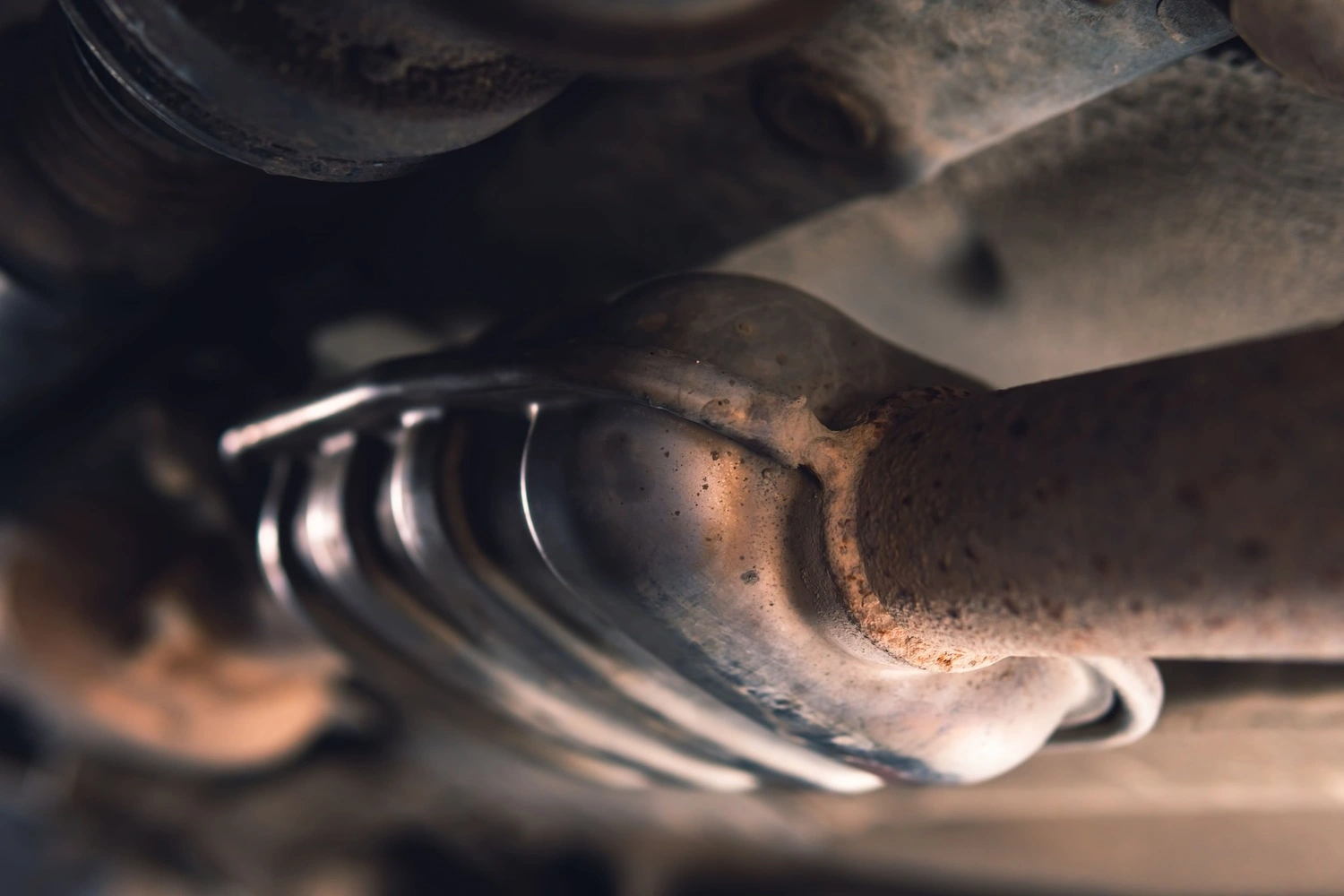
Diesel car catalytic converter as a search term
The search diesel car catalytic converter is a common one, and it shows that many diesel owners are thinking about recycling the part. The practical answer is the same as above: a diesel model can usually be recycled, as long as it is identified correctly and delivered intact for assessment. Before making a selling decision, it is also worth checking how much a catalytic converter is worth in Finland in 2026.Motorcycle catalytic converter and moped catalytic converter in recycling
A motorcycle catalytic converter can also be recycled, and the same applies to a moped catalytic converter. Two-wheeler units are smaller than car parts, so the amount of metal they contain is typically more modest, but when identified correctly they can still hold recoverable value. With small units, the same principle applies as with car parts: keep the part intact, preserve any markings, and deliver it for assessment instead of opening it yourself. If you have several small units, keep them separate from each other so that each one can be identified as its own model.Which catalytic converter does your vehicle have?
Petrol passenger car
Most often a ceramic substrate
Common and often easy to identify in recycling
Demanding use
Metallic substrate, mechanically durable structure
Not always easy to evaluate by sight – identification decides
Diesel car
A combination of ceramic and metal or another multi-part solution
Often requires special care in sorting
Motorcycle or moped
Smaller unit, more modest metal content
Same principle as with cars – keep it intact and deliver for assessment
The outer shell does not always reveal which structure is inside – let a professional identify the model before selling.
What determines the value?
Catalytic converter price is determined primarily by the model, structure, and the metals it contains. The condition or size of the outer shell may provide clues, but the actual value is determined through the contents and identification. The original text correctly highlighted platinum, palladium, and rhodium. They are key reasons why used units are actively recycled. When people ask what does a catalytic converter contain or what metal does a catalytic converter contain, the answer relates specifically to these catalytic metals and how much of them a particular model contains. If you want a deeper look at how pricing is formed, you should also read a guide explaining how price assessment works in practice. It helps explain why two parts of the same size can lead to very different assessment results. If you want to find out how catalytic converter price is assessed as accurately as possible, the most important thing is to deliver the part with its identifying information and avoid opening or damaging it beforehand. Search terms like the most valuable catalytic converters are understandably interesting, but in practice the answer is not based only on reputation or car brand. A real assessment is based on model-specific information, analysis, and how well the recycler can match the part to previously identified models.Catalytic converter metals: platinum, palladium and rhodium
The search phrase catalytic converter metals sums up where the entire value of recycling comes from. Platinum, palladium and rhodium belong to the platinum group metals, and according to a peer-reviewed review in Cleaner Engineering and Technology, spent automotive catalysts cover more than 57 percent of Europe’s platinum group metal supply – the metal concentration in a used unit is therefore considerably higher than in mined ore. This is also why recycling is an environmental act, not just a transaction. When the metals are recovered from used parts, the need for environmentally demanding mining decreases. You can read more in the article on the importance of catalytic converter recycling.How do the most common types differ?
The most common differences are found in the substrate material, intended use, and how easily the part can be identified and analyzed. For successful recycling, it is important that the type is identified correctly before further processing.Comparison of catalytic converter types
| Type | Structure | Typical use | What is examined in the assessment? | Recycling note |
|---|---|---|---|---|
| Ceramic model | Ceramic substrate and catalytic metals | Many passenger cars | Model code, condition, identifiability | Common and often easy to identify |
| Metallic model | Metallic substrate and catalytic metals | Some newer or heavy-duty vehicles | Structure, model, content assessment | Durable structure, but not always easy to evaluate by sight |
| Diesel-powered model | The structure may be a combination of ceramic and metal or another multi-part solution | Diesel cars and some commercial vehicles | Model-specific differences, markings, analysis | Often requires special care in sorting |
How does the recycling process work?
Catalytic converter recycling usually progresses from identification to analysis and then to material recovery. The better the part has been preserved and the clearer its identifying information, the more reliable the assessment can be. In practice, the process begins when the part is received, recorded, and identified based on the model. After that, the assessment may be based on a database, analysis, or both. Finally, the materials are sent for further processing, where valuable metals can be separated for industrial use.- Keep the part intact and as unchanged as possible.
- Check whether there are numbers, markings, or other identifying information on the shell.
- Keep different parts separate if you have more than one unit.
- Deliver the part to a recipient who knows how to assess the model and contents.
- If needed, ask for an explanation of what the assessment is based on.
Why does the assessment partner matter so much?
A good assessment partner reduces guesswork and improves transparency. Parts that look the same can contain different amounts of recyclable metals, so a visual inspection alone is not enough. This is where expertise makes a major difference. According to the project background information, Metalaxis uses a modern laboratory for chemical analysis and relies on a database of more than 30,000 analyzed models. This kind of foundation helps match an individual part to the correct model and supports a justified assessment. The quality of an assessment partner is also reflected in how clearly the process is explained to the customer. When the seller understands what the assessment is based on, decision-making becomes easier. This is important both for private individuals and for businesses that regularly have parts removed from use. Cooperation with refineries is also an important advantage because it supports efficient material recovery. At the same time, it strengthens a responsible chain in which valuable materials return to use instead of the part ending up in processing where its true potential is not utilized.What should you do before selling?
The best preparation is simple: keep the part intact, do not open it yourself, and save any identifying information. This makes the assessment faster, more accurate, and fairer. Many people want to quickly turn an old part into cash for a catalytic converter, but rushing usually does not improve the outcome. If the part is emptied, crushed, or its identifying information is lost, the assessment becomes more difficult. Transparency also suffers.- Store the part in a dry place and separately from other scrap parts.
- Do not remove markings or stickers from the shell.
- If the part was removed at a repair shop, ask for information about the vehicle or the part number.
- If you are selling several pieces, sort them by type in advance.
- Ask the recipient whether the assessment is based on model information, analysis, or both.


